
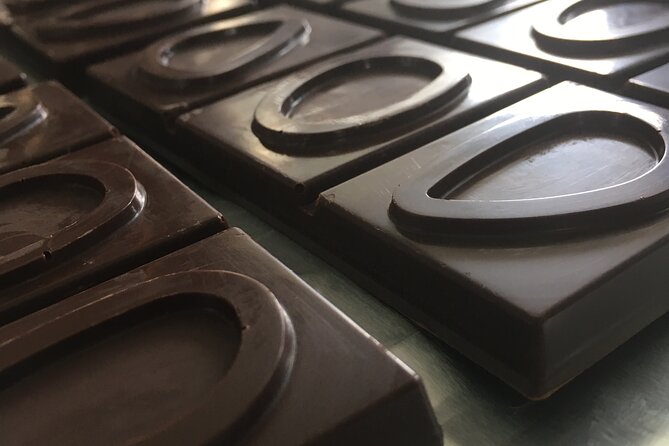
Reviewed · DRINKING TOURS
Make your own Bean to Bar Chocolate Factory Tour
The best part of this Falmouth workshop is that you do not begin with a neat square of chocolate. You start with the cocoa pod, beans, fermentation, roasting, and nibs, then work toward a finished bar. Nick and Marta connect that process to Jamaican food history, including the early use of cacao by the island’s Taino people.
I like the mix of hands-on work and useful kitchen tricks, especially the lesson on tempering chocolate with a bowl, spatula, and hair dryer. I also like the small group limit of 12, which should give you room to ask questions. The main consideration is the price: $75 for about 90 minutes is not cheap, so this suits you best if you want a focused food experience rather than a quick factory look.
In This Review
- Key points about the Falmouth chocolate workshop
- Why this is more than a chocolate tasting
- Starting with cocoa in Historic Port of Falmouth
- The cocoa pod gives the lesson a proper beginning
- Roasting cocoa in the industrial machines
- Tempering chocolate with a bowl and hair dryer
- Making Jamaican spiced chocolate with a twist
- Creating your own inclusion chocolate bars
- What $75 buys you in 90 minutes
- How the hosts shape the experience
- Who should book this experience
- Should you book the Falmouth Chocolate Factory?
- FAQ
- Where does the chocolate workshop start?
- What time does the activity begin?
- How long does the experience last?
- Where does the activity end?
- How many people can join the workshop?
- Is the chocolate vegan?
- Can I cancel for a full refund?
Key points about the Falmouth chocolate workshop
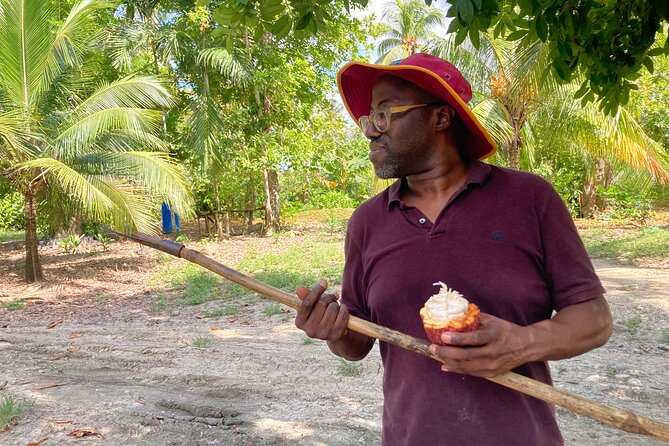
- Start with a whole Jamaican cocoa pod: You see the fruit, look inside, and learn how the beans become nibs and chocolate.
- Hear Jamaica’s chocolate story: Nick shares local family connections to cocoa growing, the Taino use of cacao, and his path from BBC correspondent to chocolate maker.
- Roast cocoa in industrial machines: This is a proper production step, not just a demonstration with a small countertop roaster.
- Learn a home tempering trick: A bowl, spatula, and hair dryer are all used to show how you can temper chocolate at home.
- Make Jamaican spiced chocolate: The traditional flavor gets a personal twist before you create your own inclusion bars.
- Keep the group small: The experience has a maximum of 12 people and ends where it begins in Falmouth.
Why this is more than a chocolate tasting
Many chocolate activities begin with melted chocolate and move straight to decorating. This one takes a wider view. You learn why cacao is a fruit, what happens to the beans after they leave the pod, and how heat changes their flavor before you ever make a bar.
That wider context matters in Jamaica. The workshop links chocolate to the island’s past and present, rather than treating it as a generic sweet found anywhere in the world. Nick’s family has grown cocoa in the area for generations, so the local connection is part of the experience, not a decorative story added afterward.
Nick also explains his own change from BBC correspondent to chocolate maker. That gives the workshop a personal thread. You are not only learning a production method. You are hearing how one person moved from reporting stories to making a food tied to Jamaica’s land, culture, and economy.
The experience is all vegan and uses dark chocolate. If you mainly enjoy creamy milk chocolate, expect a more forceful taste. The description compares the flavor to Christmas, which suggests spice and warmth rather than a mild candy-bar profile. That is a useful warning, especially if your chocolate preference runs sweet and soft.
Other Trelawny days people book alongside this one:
- Triple Action pack Combo (Blue Hole, Horse back riding and river tubing)
★ 5.0 · 669 reviews - Bamboo Rafting and horseback
★ 4.5 · 556 reviews - Private Authentic Down-to-Earth Half Day Tour in Montego Bay
★ 5.0 · 500 reviews
Starting with cocoa in Historic Port of Falmouth

You meet at 23 Harbour Lane in Falmouth at 9:00 a.m. The workshop returns to the same point, so you do not need to plan for a different end location.
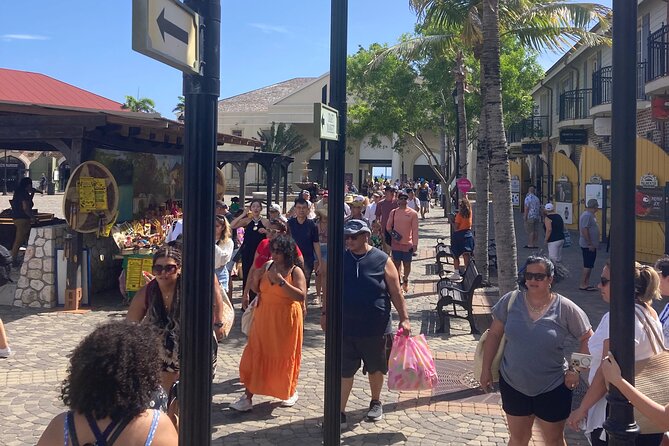
The setting is on the edge of the Caribbean Sea in Historic Port of Falmouth. This part of town is normally easiest to reach for cruise ship passengers, and the meeting point is near public transportation. If you are arriving from a cruise, pay close attention to the time zone. One couple arrived an hour early because ship time differed from island time, and Nick accommodated them. I would still treat that as a warning to check your ship’s stated local time before booking.
The early start is worth noting. A 9:00 a.m. appointment leaves the rest of your day open, but you need to organize transport and breakfast before arriving. The activity lasts about one hour and 30 minutes, so it is a compact choice for a port day rather than a full-day outing.
The group limit is 12 people. That number is large enough for a social class but small enough that the host can explain a technique, pass around a cocoa pod, and answer individual questions. Since you will be handling ingredients and making your own bars, a smaller group should feel more useful than a crowded demonstration.
The cocoa pod gives the lesson a proper beginning
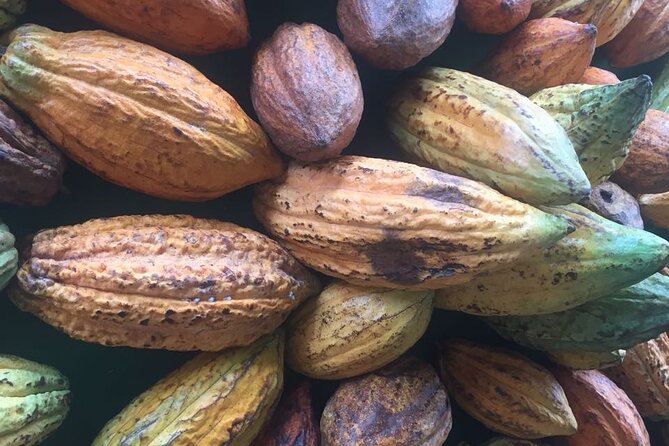
One of the strongest parts of the workshop is seeing the cocoa fruit before it becomes a processed ingredient. Nick introduces the pods up close and shows you what is inside. This simple step changes how you think about chocolate. The finished bar hides the fruit, seeds, fermentation, and work that came before it.
You learn how cocoa beans are fermented on the farm. Fermentation is a key stage in developing the flavor of chocolate, and including it in the lesson helps explain why the raw beans do not taste like the chocolate you know. You also hear how the nibs are processed before they reach the final product.
This is where the experience earns its educational side. You are not simply told that cocoa grows on a tree. You follow the sequence from fruit to bean, bean to nib, and nib to chocolate. For anyone interested in food production, that chain is more valuable than a basic sampling session.
The workshop also places cacao in Jamaican history. Nick gives a short account of the island and the historical use of chocolate, including its role among the Taino people. You will not get a full academic course in 90 minutes, but the background gives the practical work a sense of place.
Roasting cocoa in the industrial machines
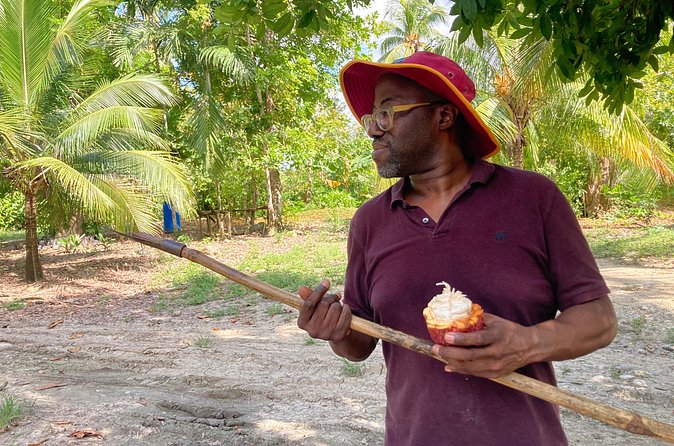
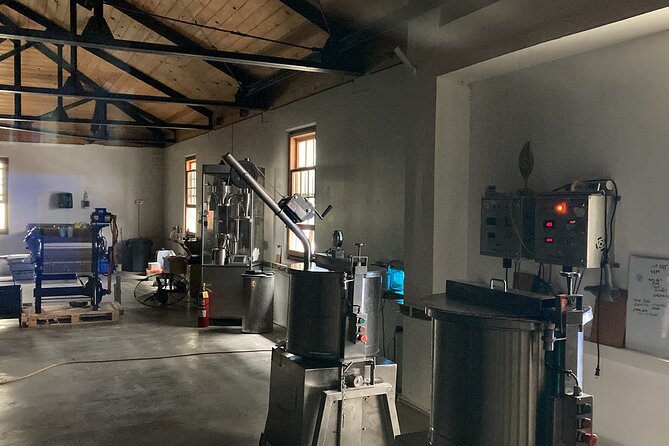
After the introduction, you roast cocoa in large industrial machines. This is a useful contrast with the later home technique. The factory equipment shows the scale and control used in chocolate production, while the kitchen lesson proves that you can still understand the process without owning specialized machinery.
Roasting changes the beans and prepares them for the next stages. Watching this happen in industrial equipment helps you see why chocolate making requires more than simply melting a bar and adding ingredients. Heat affects aroma, texture, and flavor, and the workshop puts that idea into a real process.
The description does not promise a long factory tour or a large production floor. That is important. You should book this expecting a guided workshop with factory elements, not a sprawling industrial attraction. The machines are one part of the lesson, and the focus quickly returns to making and tasting.
Nick’s favorite do-it-yourself trick follows the roasting section. He shows how to work with chocolate at home using basic tools. For me, this is one of the most useful details because it gives you something to try after Jamaica, instead of leaving the technique behind at the factory.
A few more Trelawny half-days to weigh up
- Mystic Luminescent Lagoon Night Cruise & Swim in Jamaica
★ 3.5 · 370 reviews - Falmouth Waterfalls River Tubing and Beach Adventure
★ 4.5 · 104 reviews - Explore Montego Bay to Luminous LagoonGlistening Water Night Tour
★ 4.5 · 78 reviews - Montego Bay Airport transfers-Excellence,Royalton,Ocean Coral Spring(Round Trip)
★ 5.0 · 66 reviews
Tempering chocolate with a bowl and hair dryer
Tempering can sound like specialist work. It usually brings to mind careful temperature control, shiny surfaces, and professional equipment. Here, Nick demonstrates a simpler approach using a bowl, a spatula, and a hair dryer.
The point is not that a hair dryer turns every kitchen into a chocolate factory. The point is that you can learn the basic idea of controlled heat with objects you may already have. That makes the lesson approachable for a home cook who wants to repeat the process without buying a machine.
You will want to pay attention during this part. The final texture of a chocolate bar depends on how it is handled, and a hands-on explanation is easier to remember than a written recipe. If the group is full, stand where you can see the bowl and spatula clearly, then ask questions while the demonstration is underway.
The all-dark, vegan format also makes tempering a useful skill. Dark chocolate can be less forgiving to your palate if you prefer milk chocolate, but it gives the workshop a clear focus. You are learning a traditional chocolate base rather than choosing from a wide range of confectionery styles.
Making Jamaican spiced chocolate with a twist
The flavor section centers on traditional Jamaican spiced chocolate. You get to make it with a twist, which gives the workshop a local identity without making the process too rigid.
The exact twist is not specified in advance, so you should expect the host to guide the flavor direction on the day. That small element of surprise can be fun, but it also means you should not book expecting a particular spice or recipe beyond the Jamaican spiced chocolate base.
This part helps connect the ingredients to the island. Spices change how dark chocolate tastes, and the combination gives you a better sense of how chocolate works as a food ingredient, not just as a sweet snack. The result should appeal most to you if you enjoy bold flavors and like tasting food with cultural context.
If you are bringing children, consider their taste preferences. The experience is all vegan, and the chocolate is dark. Nothing in the details promises a separate milk chocolate option, so young chocolate fans who prefer very sweet candy may not get the flavor they expect.
Creating your own inclusion chocolate bars
The workshop ends with custom inclusion bars. You create bespoke chocolate bars by adding inclusions, meaning extra ingredients mixed into the chocolate for flavor and texture.
This is the most personal part of the session. Earlier sections explain the process, but the bars give you a finished result shaped by your choices. You can think through how the base chocolate, spice, and added ingredients work together before the bars are unveiled.
The bars also give the class a clear ending. You move from the cocoa pod to the finished product in a single visit, with your own creations as the final proof of what you have learned. The experience does not simply hand you a sample and send you away.
Do not expect a huge quantity of chocolate based on the information provided. The value lies in the process, the instruction, and the custom-making session rather than in taking home a large box of sweets. If your main goal is buying chocolate, a shop would likely be a simpler choice. If you want to understand how chocolate is made and produce something yourself, the bars add real value.
What $75 buys you in 90 minutes
At $75 per person, this is priced above a casual tasting. You are paying for a guided lesson, local history, cocoa handling, industrial roasting, tempering instruction, and your own custom bars.
The value depends on how you spend your time in Jamaica. For a cruise passenger with only a port stop, a one-and-a-half-hour activity can work well. It stays close to Falmouth, starts early, and returns to the meeting point. You get a substantial food experience without committing to a full day away from the port.
For a couple or small group that enjoys cooking, the practical techniques strengthen the value. The hair-dryer method is especially useful because it gives you a way to continue experimenting at home. The background about Jamaica’s cocoa tradition adds another layer that a standard confectionery class may not provide.
The price may feel high if you are looking for a quick sample or a factory photo stop. This is a workshop, and the educational parts take up much of the 90 minutes. Go for the activity and the story, not just the amount of chocolate you carry away.
The experience is often booked about 64 days ahead. That suggests you should plan early, particularly if you are fitting it around a cruise schedule or want a particular morning. Confirmation arrives at booking, and free cancellation is available if you cancel at least 24 hours before the start time. Changes or cancellations inside that window are not accepted for a refund.
How the hosts shape the experience
Nick is the main storyteller and instructor described in the experience. His connection to a family of cocoa growers in the area gives the local material a personal anchor. His former work as a BBC correspondent also helps explain why the class puts so much weight on the story behind the food.
Marta is also part of the hosting team. Together, they lead the tasting and chocolate-making work. The small group size should make it easier to interact with both hosts instead of simply watching from the back of a room.
The strongest praise attached to this experience centers on its educational and unusual nature. That matches what the structure promises: Jamaican culinary history, Taino cacao use, the cocoa process, roasting, tempering, and custom bars. It is a good fit if you want to understand how a local product connects to people and place.
The hosts also seem flexible about timing issues. The example of accommodating an early arrival is useful for port visitors, but do not treat it as permission to ignore the start time. Check the local time and arrive prepared.
Who should book this experience
I would recommend it most strongly to:
- You enjoy food workshops more than passive tastings.
- You want a Jamaican experience close to Falmouth.
- You like dark chocolate, spice, and vegan food.
- You are curious about farming, fermentation, and food production.
- You want a small group with direct contact with the hosts.
- You are traveling by cruise and need a short morning activity.
It may not suit you if you want milk chocolate, a long factory tour, or a large amount of finished chocolate. It is also not the right pick if your schedule cannot handle a firm 9:00 a.m. start.
Families may find the hands-on format appealing, but the dark chocolate profile is worth considering before booking. The information does not specify a minimum age, child price, or special children’s version, so check those points directly if you are planning a family visit.
Should you book the Falmouth Chocolate Factory?
Book this workshop if you want a story-led, hands-on look at Jamaican chocolate rather than a simple tasting. The cocoa pod, local family connection, industrial roasting, home tempering trick, and custom bars give the 90 minutes a clear purpose.
I would be more cautious if the $75 price feels steep for a short activity or if you only enjoy milk chocolate. For a cruise passenger, a food-focused couple, or anyone who likes learning by making, the location and small group make the cost easier to justify. Plan ahead, check the time zone, and arrive ready for dark chocolate with a Jamaican spice profile.
FAQ
Where does the chocolate workshop start?
The experience starts at 23 Harbour Lane in Falmouth, Jamaica.
What time does the activity begin?
The stated start time is 9:00 a.m.
How long does the experience last?
The workshop lasts approximately one hour and 30 minutes.
Where does the activity end?
It ends back at the meeting point at 23 Harbour Lane.
How many people can join the workshop?
The activity has a maximum of 12 travelers.
Is the chocolate vegan?
Yes. The experience uses vegan dark chocolate.
Can I cancel for a full refund?
Yes, if you cancel at least 24 hours before the local start time. Cancellations or changes made less than 24 hours before the experience are not accepted for a refund.
More Drinking Tours in Trelawny
- Appleton Rum Factory, Ys Falls, Black River Safari, Floyd’s Pelican Bar
★ 4.5 · 12 reviews - Negril One Love Bus Bar Crawl
★ 4.5 · 1,170 reviews - Reggae Catamaran and Snorkeling Open Bar Cruise Montego Bay
★ 4.0 · 453 reviews - YS Falls, Black River Safari, Appleton Rum Tour OR Pelican Bar (Choose Up to 3)
★ 5.0 · 90 reviews
More Dessert Tours in Trelawny
- Devon House Tour with Ice Cream from Kingston
★ 4.5 · 3 reviews
Just added around Trelawny
- Blue Hole & Secret Waterfalls Tour from Falmouth Cruise Ships★ 5.0 · 11 reviews
- Round-trip Airport Transfer to Royalton Blue Waters & White Sands Hotel★ 5.0 · 3 reviews
- Royalton White Sand and Blue Waters Airport Transfer★ 4.5 · 13 reviews
- Shared – Jungle River Tubing Adventure Tour from Falmouth★ 4.0 · 4 reviews
- Dunn’s River Falls and Park Tour with Zip Line from Montego Bay★ 5.0 · 3 reviews
- Round-Trip or Direct Private Airport Transfers to your Resort in Falmouth★ 5.0 · 6 reviews
- Royalton Blue Waters and White Sands Private Airport Transfer★ 5.0 · 9 reviews
- Royalton Blue Waters Airport Private Transfers and Hideaway★ 5.0 · 3 reviews
Drinking Tours, compared.


Reggae Catamaran and Snorkeling Open Bar Cruise Montego Bay
Read our review →
YS Falls, Black River Safari, Appleton Rum Tour OR Pelican Bar (Choose Up to 3)
Read our review →
Private Transportation from Montego Bay to Appleton Estate & Pelican Bar
Read our review →
Appleton estate,YS Falls,Black River Safari,Pelican Bar(any 3of4)
Read our review →Browse the lists this tour appears in